
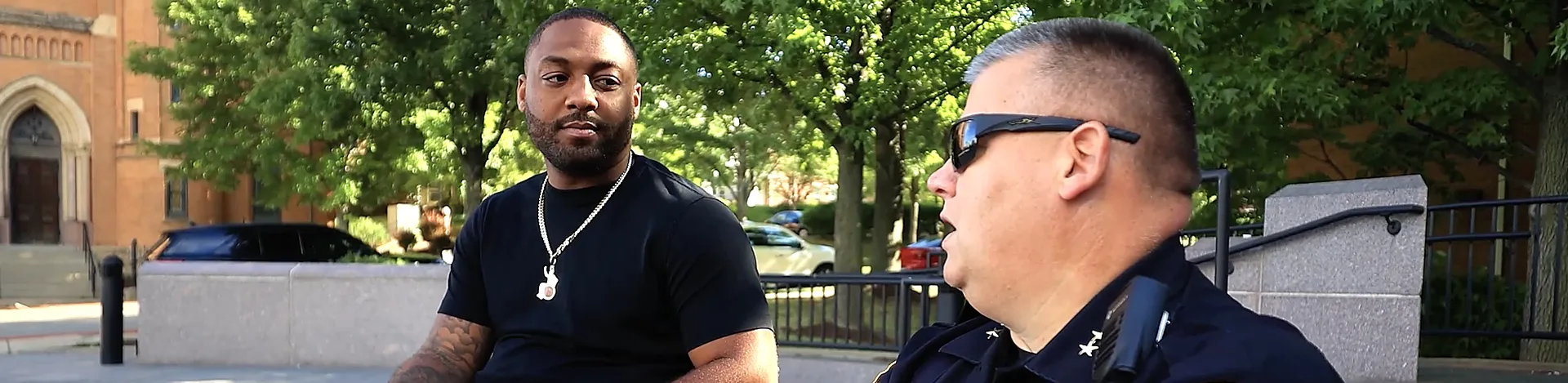


A black teenager, white police officers, and violence at a traffic stop.
It's a volatile scenario that has played out countless times, igniting outrage and protests, fueling a perpetual cycle of accusations, fear, and mistrust.
But what happened to Leon Ford in 2012 led to something else: the creation of a foundation dedicated to building and strengthening relationships between police and the community. It is the story of two remarkable men, the lawyer who brought them together, and a law firm committed to making that foundation a reality.
A Case of Mistaken Identity
On November 11, 2012, 19-year-old Leon Ford was driving through the Highland Park neighborhood of Pittsburgh, heading to his grandmother's house. Two police officers pulled him over and asked for his driver's license and registration. Instead of writing him a ticket for a traffic violation, the officers questioned Leon about who he really was. They called in a third officer because they suspected that Leon was actually Lamont Ford (no relation), a wanted gang member.
Ten minutes passed, 15, 20, tensions rising. The officers told Leon to get out of the car. He resisted. The third officer, David Derbish, hopped in the front passenger seat. Leon panicked and hit the accelerator. Derbish shot Leon five times and the car crashed into a nearby porch.
It all happened in flashes. Leon was so confused that for a moment he thought he had been tazed. "I didn't realize I was shot until I could actually feel the blood under me," he recalled. One of the bullets struck a vertebra. Leon has been paralyzed from the waist down ever since.
Later in the hospital he discovered that he had been shackled to the bed. He was being charged with resisting arrest, reckless endangerment, escape, and aggravated assault. "That was the night that changed my life," he said.
Leon was eventually acquitted on all of the charges. The officers were not criminally charged. Leon later filed a civil rights lawsuit against the city, the Pittsburgh Bureau of Police, and the officers. The city settled with him in January of 2018. At the civil trial, the officers testified that they had aimed a flashlight inside the car and saw a bulge in Leon's sweatpants that they thought might have been a gun. One of them tried to pull Leon out of the car for a pat-down. That's when the other officer jumped in the passenger side of the running car. The bulge, it turned out, was a cell phone and keys.
Countering Hate with Healing and Hope
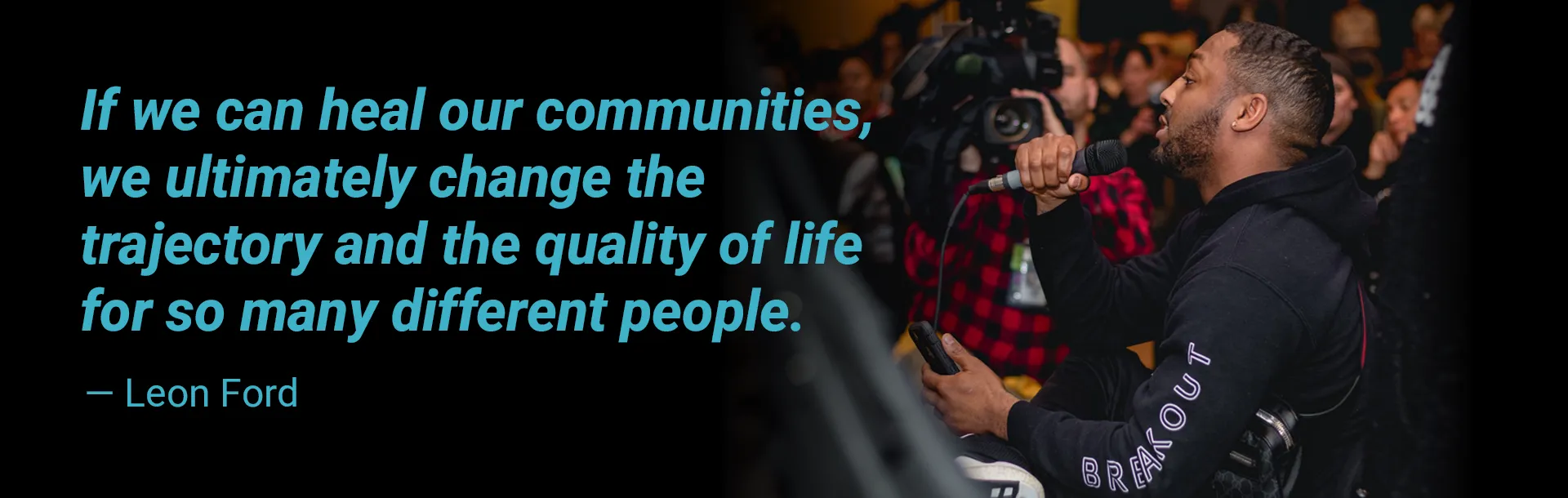
At the time of the shooting, Leon was a good athlete, an aspiring boxer. His father had been in prison since Leon was six years old. When he was 13, his younger sister was killed when she was hit by a truck. He had lost friends to gun violence. He was well aware of tragedy before his own. Instead of wallowing in hate and bitterness, he chose a different path. "I was angry, I wanted revenge," he said. "But my desire for joy was stronger than that. I didn't want to live in that anger."
While he was recovering in the hospital, Leon became a father. His son was born, in the same hospital, on January 1, 2013. "I thought, I don't care about my life, but if I die or go to prison, who will be there to teach my son? If I decided to do something violent then my legacy becomes that of violence."
As the years passed, Leon thought more about how he could help others. "I've done the work throughout my journey, through reading, through writing, through therapy, where I've learned to understand why I feel what I feel. That self-awareness helps me give myself grace, helps me understand other people and give them grace."
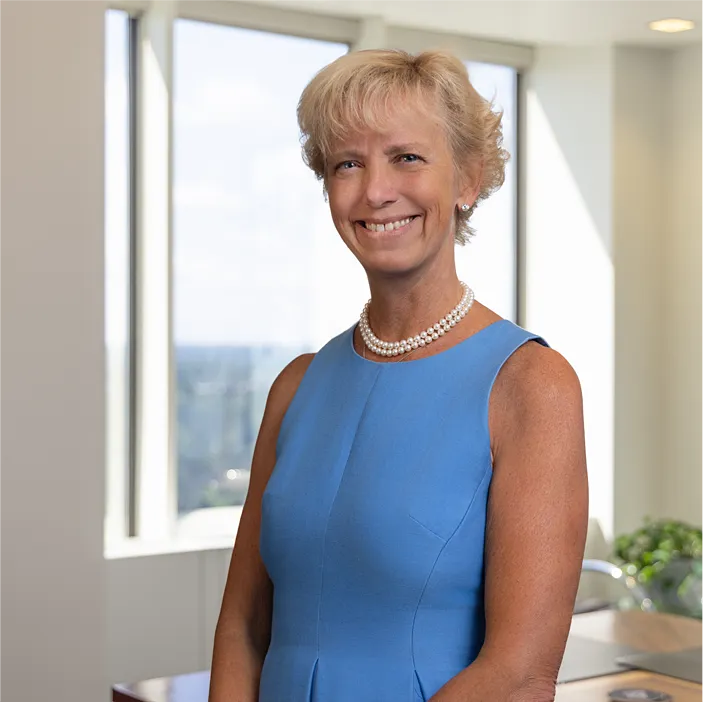
With that in mind, in 2020, a mutual friend put him in touch with Laura Ellsworth, a lawyer in Jones Day's Pittsburgh Office.
"I really didn't know much about Leon or his backstory," recalled Laura, who heads Jones Day's Global Community Service Initiatives. "We met for lunch, and I said, 'Leon, what can I do for you?' And he looks me dead in the eye and says, 'I'd like to meet the Chief of Police and the officer who shot me.' I said, 'Why on earth would you want to do that?'"
Leon's response: "Because this community needs to heal. And if I can find authentic healing and forgiveness with those two men, then anybody can do it."
Laura reached out to Pittsburgh's then-Police Chief Scott Shubert. It helped that he was a close friend who Laura knew from previous community work they had done together. She invited him and Leon to meet at Jones Day's Pittsburgh Office. "Everybody in Leon's family and his world was telling him he was crazy to do this," said Laura. "All of the chief's police friends were telling him he was crazy to do it. But these two men had the courage to trust and to believe that maybe there was a side of that other person they didn't know yet."
Both Leon and Scott took that leap: "I think trust is currency," said Leon. "I don't think I would have trusted Scott in any other space, but because Laura connected us and I trusted Laura, that allowed me to go there with a level of openness, vulnerability, and respect."
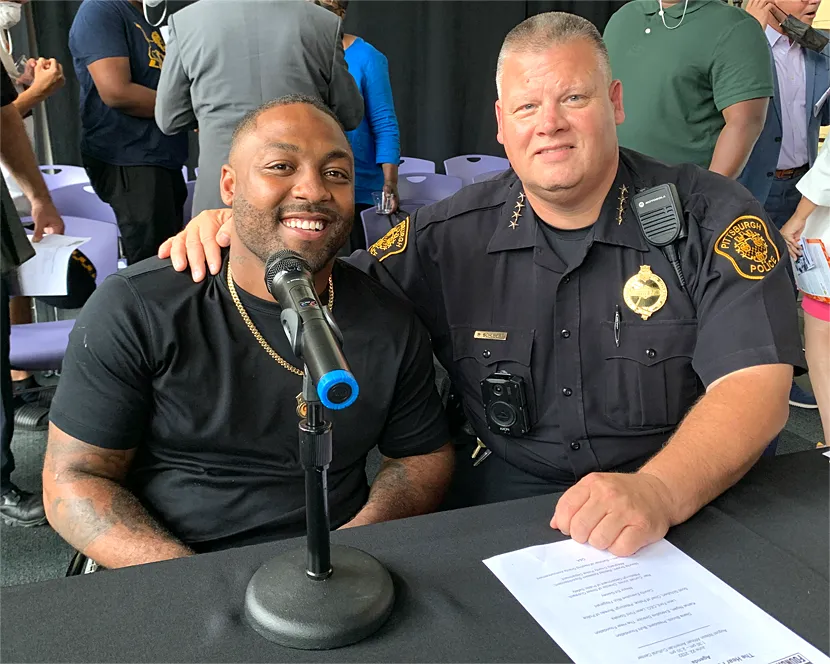
The emotional encounter that day served as the catalyst for The Hear Foundation, which launched in June 2022.
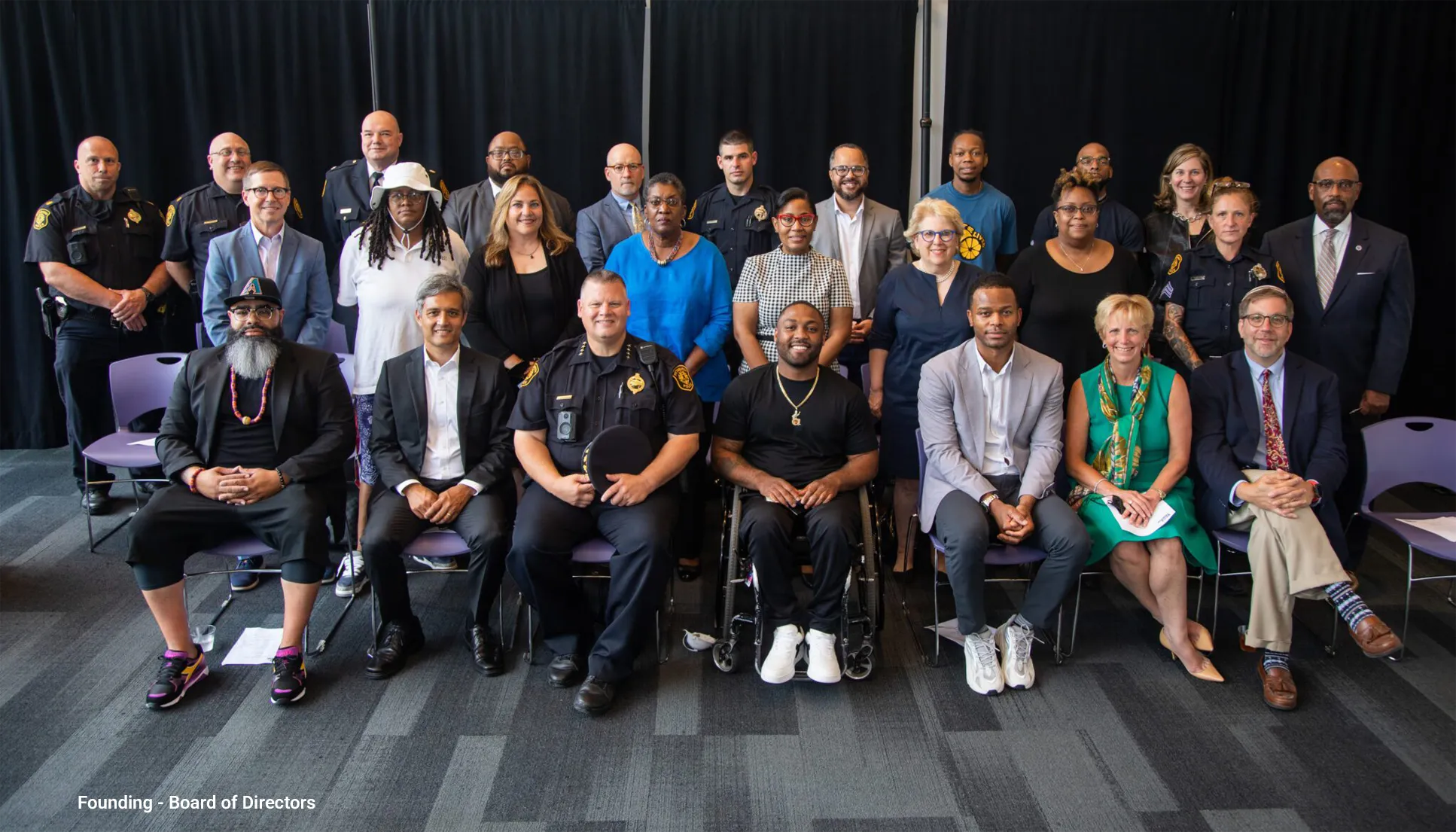
"Working with these two men and hearing their ideas, we began to talk about creating a foundation," said Laura. "I immediately reached out to my colleagues at Jones Day who know how to start foundations. We began by working with our community contacts to recruit them to the board. The Hear board is unique in that it's one-third police officers, one-third community people who've never served on a board, and one-third business leaders."
Hear is not an acronym. It refers to the act of listening and letting everyone be heard.
"I think it's important that you hear from everybody in the community, if you truly want to help fix it," Scott has said.
Chris Ragland, a former police commander who co-chairs Hear's board of directors, said, "Without Jones Day, without Laura Ellsworth, without the resources that they brought to the table, without the pro bono legal work, this foundation would never have gotten off the ground." The Jones Day Foundation also has provided funding to support Hear's work.
After meeting with the chief, and putting in the work to launch the foundation, Leon had one more encounter to conquer: meeting the man who shot him five times. He met Dave Derbish at a Pittsburgh hotel in 2021, along with a police commander and a reverend. The events of the fateful night nine years earlier were not dissected, but Leon described the meeting as a soul-rattling, deeply cathartic moment, in which he chose reconciliation over retaliation.
"I was a vulnerable boy the night that he shot me," wrote Leon in his memoir, An Unspeakable Hope. "Now, I was a grown man, sitting before him and looking him in the eye." In the course of the conversation, Derbish, who remains with the police department, did not apologize, according to Leon. But Leon had moved beyond that. "In shooting me, the system had stolen my dignity. Through this meeting I had reclaimed it. That was more than enough. No apology was necessary."
Making a Difference
Today, The Hear Foundation is the only nonprofit in Pittsburgh exclusively dedicated to collaborating with community leaders, police, and residents to create a safe, thriving community. Its primary programs include reducing gun violence, addressing trauma, workforce development, and "Stand For All Pittsburgh," which works to prevent, identify, and address bias and hate incidents.
The foundation also runs multiple programs to support young people and guide them into public safety jobs, including police, fire, and EMT. Hear also takes a group of these students each year to present at the national conference of NOBLE (the National Organization of Black Law Enforcement Executives), and is currently working with NOBLE to expand Hear's unique workforce development model to other cities.
Hear co-founder Leon Ford is now the Director of External Affairs. He is also an author, community activist, and speaker at events around the world. Co-founder Scott Schubert retired from the police department in 2022 after nearly 30 years, and is now the Chief of the Law Enforcement Support Section at the FBI's Criminal Justice Information Services Division.
Building a thriving enterprise out of the aftermath of a tragic incident was made possible because two people were willing to take a chance and listen to each other.
"Leon Ford is a unique human being and Scott Schubert is a unique human being," said Laura. "You only need two. You start with two, and you grow from there."